
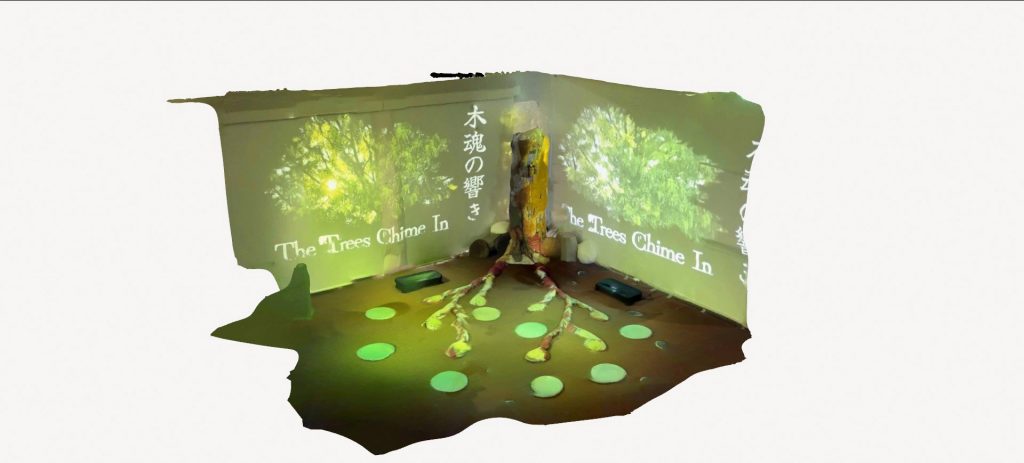
The Trees Chime In
The Tree’s Chime was part of an opportunity I participated in when a team of friends and I applied for (and received) the President’s Award for Global Learning from UT Austin. My team, along with 3 other teams, went on a 6-week trip to Japan to learn about its culture and create an immersive experience. The Tree’s Chime In was born from that. The role I was in charge of for this project was the haptic interactions.
Partnering with Keio University, I was shown many haptic devices and learned how they used haptics to create sensory experiences. Using what I learned from there, I was able to bring an enjoyable sensory expertise to the project. After I determined which haptics we would use and learned how to use them, it was decided that a heartbeat would play through them throughout the show, to make the tree feel “alive”. After that, a few others and I soldered wires onto the ends of the haptic devices and hooked them up to an amplifier. The wires were hidden beneath the tree’s roots, and cardboard was used to house the haptics and provide a large, flat surface for a user to touch.
Following the show’s success, we transported the technology back to the U.S. to continue development. I worked on haptics hardware iteration, new Haptic configurations and sensations, and synchronization with the entire show. We conducted a live show at UT.
Roles
- Haptic Designer
- Contributor to experience design
- All around trouble-shooter!
Project Challenge
Haptics Tech Choice
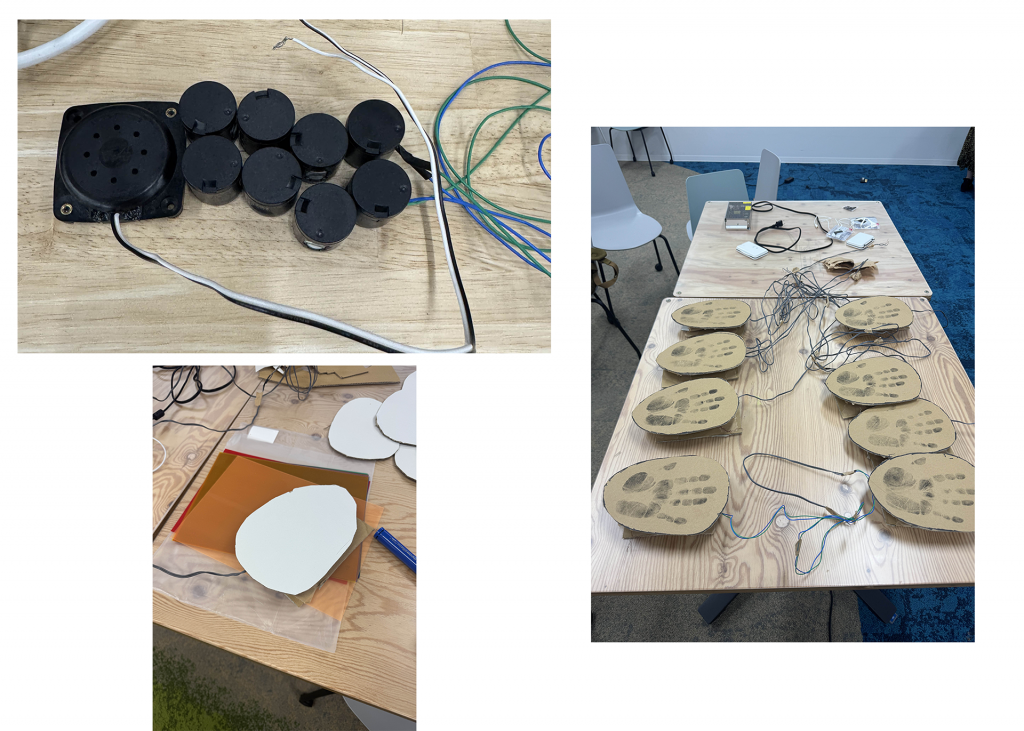
As the team created the design for our experience, I had to work with the Keio University graduate students to choose which tech to utilize. We had a very limited budget, spacing, and time (about 2 weeks) to create and run the experience. I needed something that was small and user friendly. Plus I needed quite a few of them! Whatever I chose had to be durable enough to work with multiple users and generate the “heartbeat” experience that my team wanted to convey.
I ended up choosing actuators attached to amps, which in turn attached to my computer. These could be “housed” in a pocket of cardboard to keep the wires in place and easily communicate what the participant needed to do.
This worked pretty well — although I did have to make a mad dash across Tokyo to replace a broken actuator at the last minute — an hour long train ride to get a spare and back again!
Project Challenge
Material Procurement
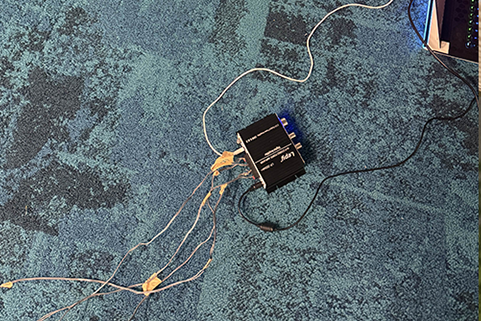
Another challenge I faced with the haptics design was finding enough wire! To get from the “tree” to the actuators in the cardboard we needing to run a bunch of wiring. It was difficult to find wire being in a foreign country with a very limited budget. An enterprising teammate procured some thick home stereo wire and we made it work! .
After solving that challenge, we had another! How to get 8 actuators with 16 end points to fit into 2 amps with 2 connections. So we ended up connecting 4 actuators to each one with some “gentle” persuasion. 😉
Project Challenge
Relocation and Rebuild
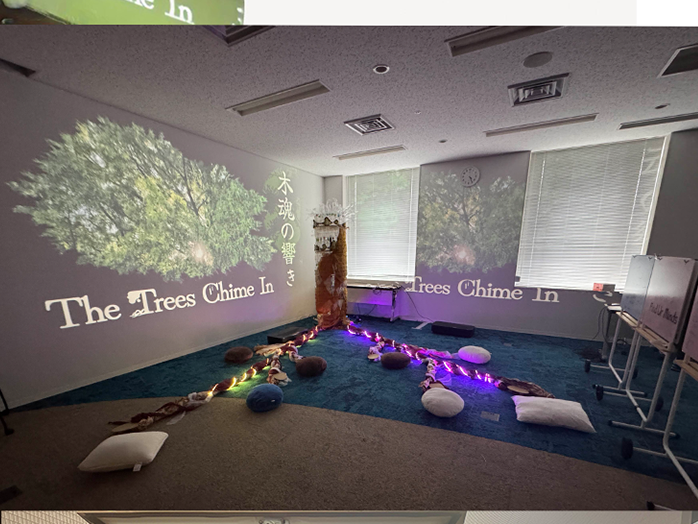
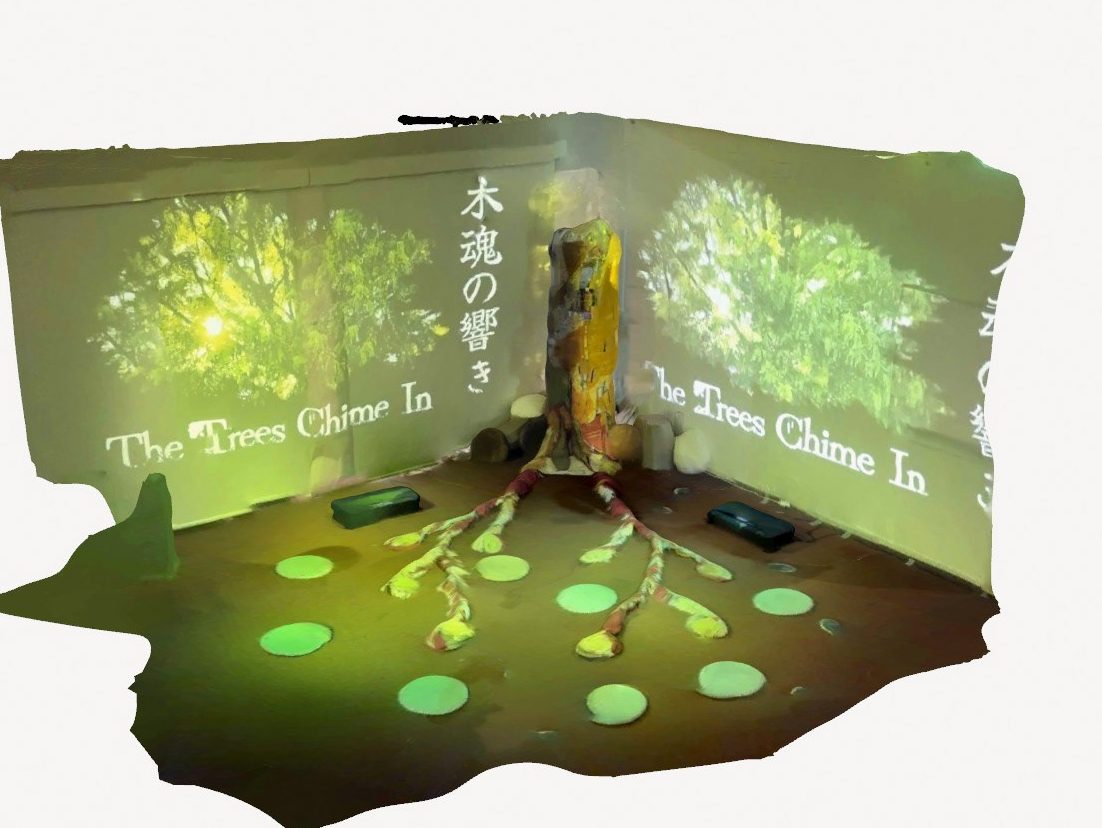
When we built this experience in Tokyo, we had VERY limited access to materials. So our team ended up building the tree out of water bottles, butcher paper and fabric.
Then we went back to the US, we couldn’t take those 150 empty water bottles back with us! So we had to recreate the tree or the cardboard touchpoints (although we did get to keep the haptics!) In some ways this was easier in that we had access to more materials (and could transport them without getting on trains/buses) but it did require us to rethink the experience as we recreated the experience in a new space.